Spanish
 Russian
 Arabic

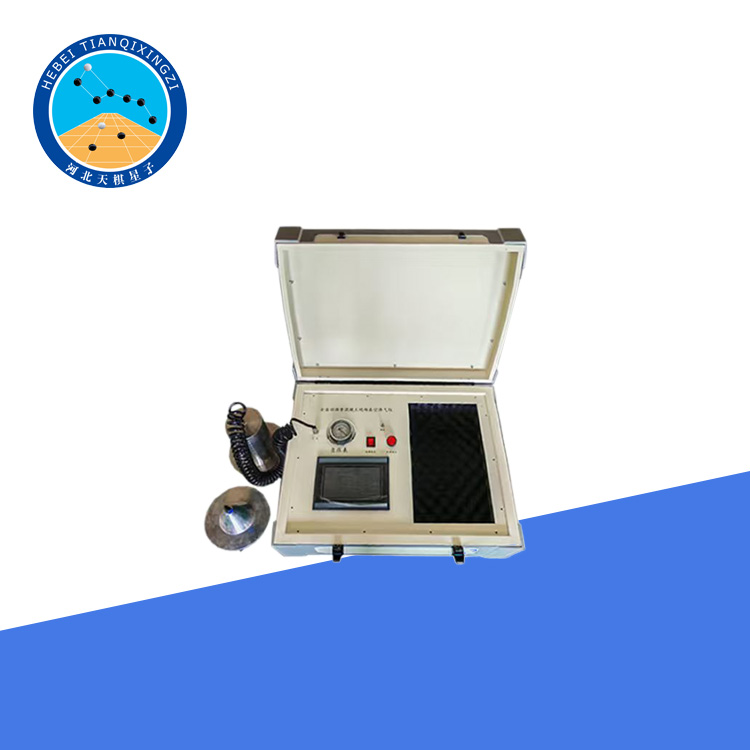

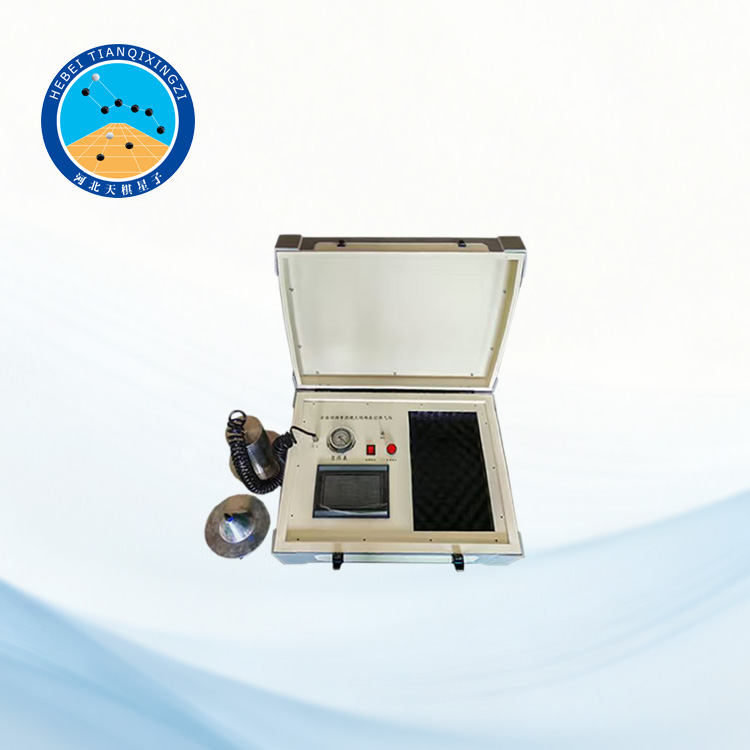
Products Description
This device automatically measures the air infiltration rate or volume change by creating a vacuum environment on the road surface, quickly reflecting the road surface density and construction quality. The instrument is easy to operate and provides accurate data, making it widely used for on-site quality inspection and scientific research of highways, bridges, and airport runways.
Asphalt Concrete Vacuum Permeameter
Model:TDFYSQ-514
I.Purpose and Scope
The fully automatic on-site vacuum permeability tester for asphalt concrete conforms to the SL-514-2013"Specification for Construction of Hydraulic Asphalt Concrete"and DL/T5362-2018"Test Procedure for Hydraulic Asphalt Concrete"issued by the Ministry of Water Resources of the People's Republic of China,and can also refer to the EN 12697 series and ASTM permeability test methods for performance evaluation.The fully automatic on-site vacuum permeability tester for asphalt concrete is used to test and evaluate the impermeability of paved asphalt concrete.
II.Technical Parameters
1.Pressure Measurement Range:0~90Kpa
2.Specimen Standard:φ100x200mm(height)
3.Instrument Dimensions:635x485x285mm
4.Rated Power:60W
III.How to Use the Instrument
1.When using the instrument outdoors,a vehicle-mounted inverter is provided.
2.Turn on the power switch.On the main interface,click the"Start"button.The device will automatically complete the pumping,pressure holding,and calculation processes until the results are displayed.To stop the process,simply click the"Stop"button.
3.History page:Up to 7 history records can be saved.Scroll through the records.Clicking the"Clear History"button will clear all history records.
4.Settings page:The pressure correction value allows fine-tuning of the pressure sensor's measured value(positive for increase,negative for decrease).Clicking the"Time Settings"button will take you to the time settings page.After setting,click the"Save"button;otherwise,the settings will not be saved.
5.Sealing putty:Sealing putty is used to seal the flange of the steel cylinder of the vacuum permeator.Linseed oil putty or other sealing putty can be used for sealing.
IV.Test Procedure
1.Place the permeameter on a relatively stable and flat location near the test site,and remove the steel drum.
2.Apply sealing putty between the asphalt concrete testing surface and the steel cylinder flange,ensuring no air leakage.
3.Turn on the power and set the site number and target pressure value on the main page.
4.Click the start button to activate the vacuum pump,bringing the relative vacuum of the steel cylinder to the set-85 kPa.The equipment will automatically disconnect the vacuum pump.After stabilizing for 1 minute,the permeability meter will automatically calculate and display the result.
5.The criterion for judging the test result is:when the variation in relative vacuum is no greater than 3 kPa,the asphalt concrete is considered impermeable.
6.The asphalt concrete surface should be dry.
7.In summer,the test should not be conducted during the hottest part of the day to prevent the asphalt concrete from flowing or bulging into the vacuum cylinder.
8.If the asphalt concrete surface is uneven,the surface should be carefully heated and leveled with a vibratory tamper before the test.
V.Precautions
1.The instrument is equipped with an air drying device to ensure that the gas entering the vacuum pump is dry.If water is found to have been pumped into the pipeline due to incorrect operation,the front door must be opened and the drying device turned on for drying.
2.After the experiment,the test cylinder should be cleaned promptly,and all water traces on the test cylinder and the instrument should be wiped dry.
3.Water droplets spilled due to operational errors must not be allowed to fall into the instrument housing.